
City-scale Networking drone
management system
PROFILE
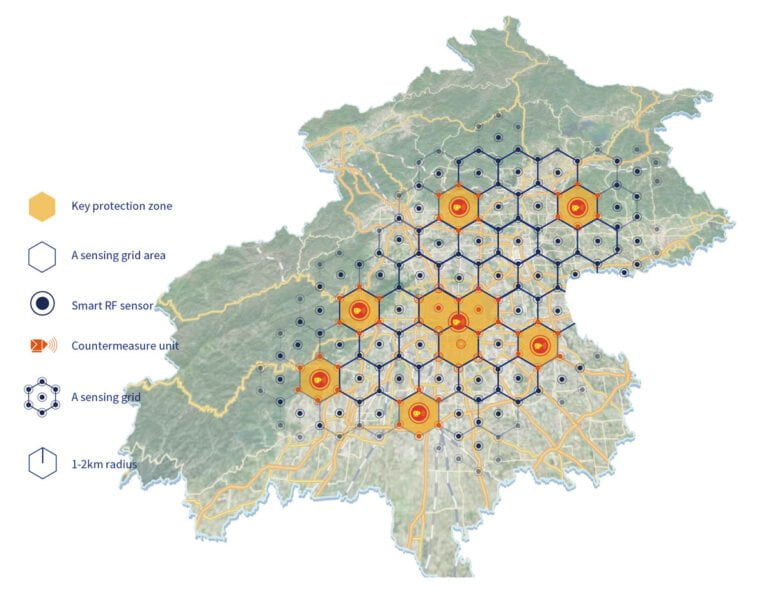
The system can be used as a new type of infrastructure for urban airspace management. Through smooth expansion, it can monitor and manage city-scale large area 24/7 to ensure safety and order or urban lower airspace.
Deploy a number of smart RF sensors across a large area, multiple adjacent sensors can network to form a sensing grid. Many such sensing grids then converge into a city-scale lower airspace monitoring network.
The system can flexibly set up multiple key protection zones. The detection, recognition and long-distance early warning of drones are realized through sensing nodes, the precise positioning of targets is realized based on TDOA algorithm.
The two major advantages of the system “information sharing” and “data fusion” are fully utilized to continuously track and lock targets across regions. In order to prevent unwanted drones trying to break into the key protected zones, the system quickly links countermeasure units to handle targets to achieve efficient management and control of large areas.
FEATURES
Autonomy
7*24 hours artifical running, integrated detection and countermeasure, autonomous countermeasure
Elasticity
Flexible scaling-up
Large area Precise countermeasure
Directional jamming, targeted countermeasure
Data sharing
Data from different grids can be shared in real time, breaking information silos
Multi-target tracking and handling
Support multi-target tracking and positioning, real-time trajectory display
Data fusion
Fusion of monitoring data from different grids
Fast response
Response time < 4s
Coverage
City-scale large area coverage
Passive detection
Passive detection technology, no signal emission, highly covert
Super-wide frequency band monitoring
Frequency coverage 100MHz ∼ 6GHz
Efficient linkage
Smart linkage between detection and countermeasure
Multi-level defense strategy
Customizable multiple defense zones
Frequency coverage
Cover typical drone frequency
List
Able to identify cooperative and non-cooperative drones
DJI and non-DJI
Various drone types, DJI series, WiFi, FPV, etc…
X1A
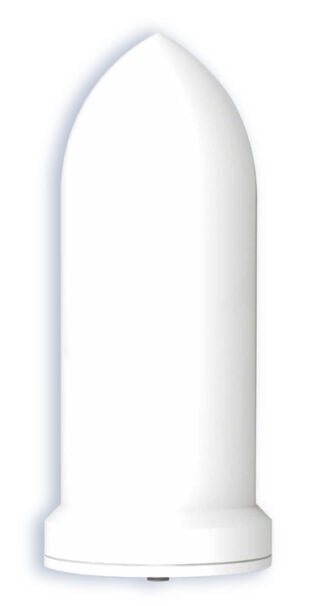
A single X1A can independently detect and identify drones. Multiple X1As can network to precisely locate the trajectories of drones based on TDOA algorithm. X1A collects surrounding radio signals and sorts drone signals out via AI technology. When a drone signal is identified as coming from an unwanted source, the platform will automatically alert security to take measures.
Passive detection
Passive detection technology, no signal emission, highly covert.
Super-wide spectrum monitoring
Frequency coverage 100 MHz – 6 GHz, real-time spectrum analysis.
DJI and non-DJI
DJI, WIFI, FPV, racing drone models included.
TDOA based positioning
Multiple X1As can network to locate drones.
Low false alarm rate
Average false alarm rate < once per day.
Explosin-proof design
State certified explosion-proof design with rugged architecture.
Work mode:RF sensing
Detection target:Drone image-transmission signal
Frequency:100MHz – 6GHz
Detection range: Urban environment 1 – 5 km (Variation due to environment and drone model)
Target number(simultaneously): 10+
Protection grade: Non-explosion-proof version: IP67 – Explosion-proof version: IP68
Explosion-proof mark: Ex d[ia Ga] IIL T6 GB/Ex tD A21 IP68 T80° (Explosion-proof version)
X1B
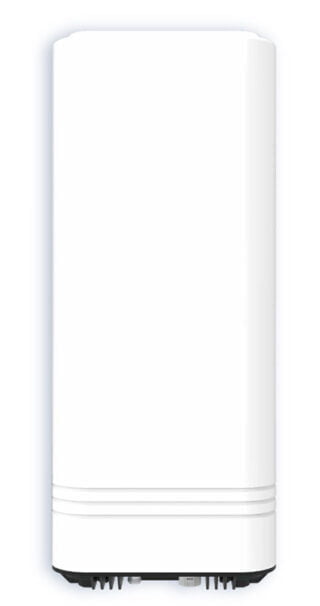
A single X1B can independently discover and identify drones. Multiple X1Bs can network to locate drones based on TDOA algorithm. The equipment adopts a specialized antenna design which features super wide frequency bandwidth, long detection range, strong anti-interference capability. It is suitable for deployment in complex urban environment.
TDOA-based passive detection
Passive RF sensing, no signal transmission, environmental friendly.
Strong anti-interference capability
Stable running under urban environment.
Low false alarm rate
Average false alarm rate < once per day.
Drone positioning
Multiple equipments can network to conduct TDOA-based positioning.
List
Able to identify cooperative and non-cooperative drones.
Long range coverage
Detection radius 2 – 6 km (variation due to environment and drone model).
DJI and non-DJI
DJI, WIFI, FPV, racing drones included.
High refreshing rate
Average detection result refreshing time < 1s.
Intergated design
Easy to deploy and use
Work mode:RF sensing
Detection target:Drone image transmission
Frequency:100MHz – 6GHz
Detection range: Detection radius 2 – 6km (Variation due to environment and drone model)
Target number(simultaneously): 10+
Fixed-frequency drone jammer
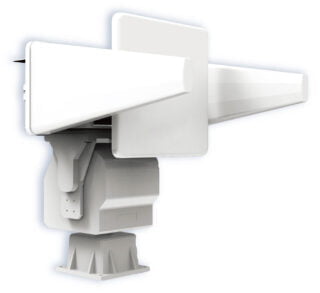
This equipment is used to drive away or force to ground of unwanted drones. It is based on the mechanism of radio interference and jamming. It performs targeted and precise strikes on unwanted drones, effectively cutting off the drone’s communication and navigation link, and forcing it to fly back or make a forced landing, thereby ensuring the lower airspace safety of the controlled area.
(Please note that permission from authority is required to conduct radio jamming).
Fixed-frequency jamming
Independent or simultaneously radio jamming with typical drone frequency such as 900M, 1.5G, 2.4G, 5.8G.
Linkage with drone detection network
Able to link with drone detection network to autonomously provide continuous counter-strike.
Long effective range
1.5 – 3 km effective (Variation due to environment and drone model.
Low collateral interference
Concentrated emission with low collateral interference to the environment.
Fast response
Response time < 4s.
Work mode:RF sensing
Work target:Control, navigation signal
Frequency: 900MHz, 1.5GHz, 2.4GHz, 5.8GHz
Range: 1.5 – 3 km (Variation due to environment and drone model)
Coverage: Azimuth 0°- 360°, vertical -30° – 60°
Work temperature: -20℃ – 55℃